
Brand Identity Checklist: Logo, Colours, Fonts and Voice That Work Everywhere
A strong identity looks and sounds the same everywhere: on a phone screen, a hoarding, a visiting card and a WhatsApp reply. Use this checklist to get there.

Your brand appears in dozens of places: a tiny Instagram profile picture, a large shop board, a PDF quotation, a uniform, a WhatsApp message. A strong identity works in all of them. Use this checklist to find the gaps.
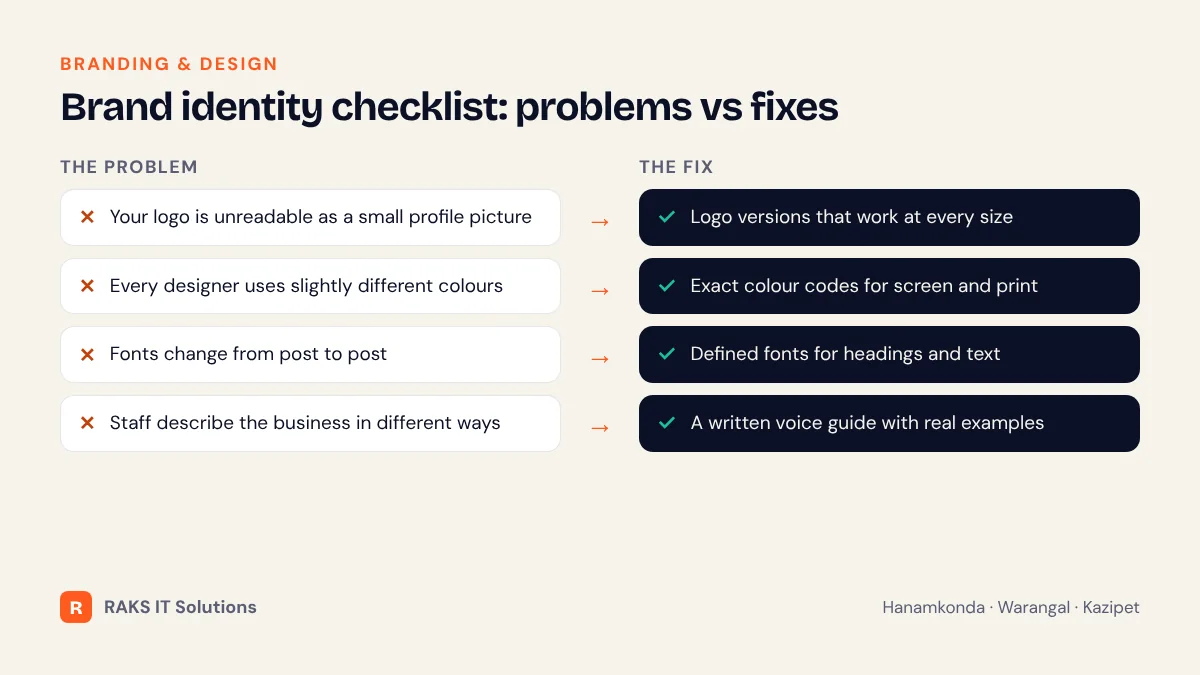
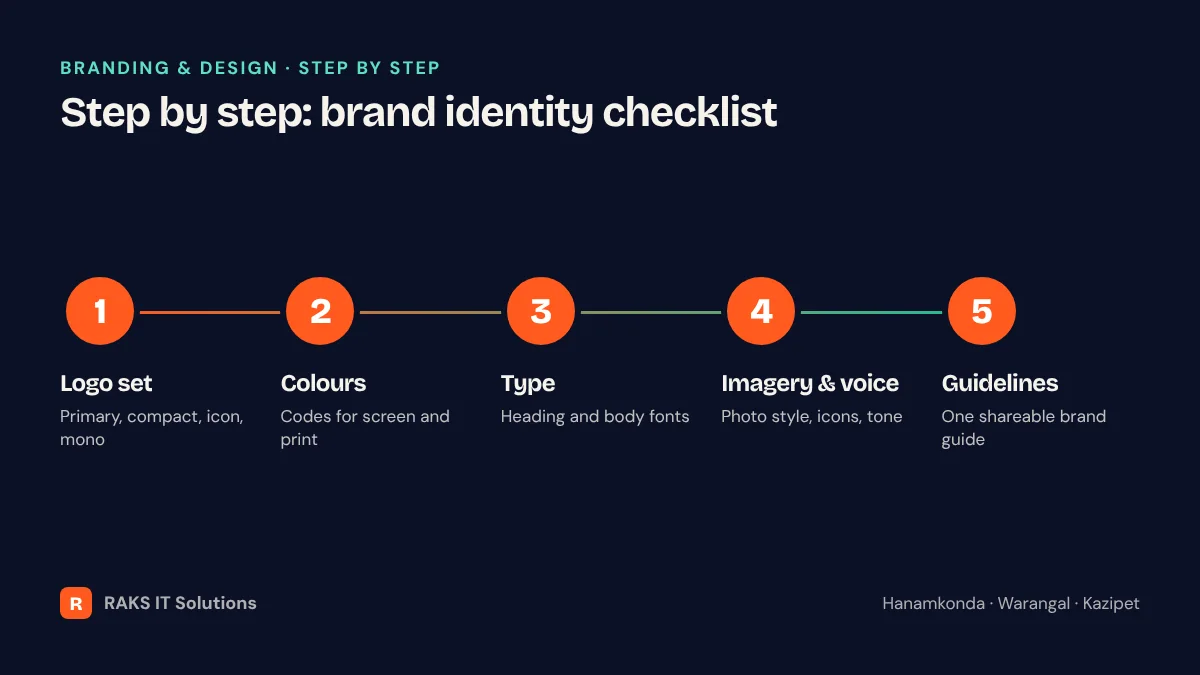
1. Logo
- Primary logo: the full version for most uses.
- Compact version: for narrow spaces and small sizes.
- Icon or monogram: for profile pictures, favicons and app icons.
- Single-colour versions: white and black for photos, stamps and embroidery.
- Clear space and minimum size rules.
- Files: vector (SVG, PDF or AI) plus transparent PNG.
Test: shrink your logo to the size of a WhatsApp profile picture. Is it still recognisable?
2. Colours
- One or two primary colours that represent the brand.
- One or two accent colours for highlights and buttons.
- Neutrals for backgrounds and text.
- Exact codes: HEX/RGB for screens, CMYK for print, and Pantone if needed for signage or merchandise.
- Contrast checked so text stays readable.
Test: compare your printed visiting card, signboard and website colours side by side. Do they match?
3. Typography
- A heading font with personality.
- A body font that's easy to read on screens.
- Rules for sizes, weights and spacing.
- Fallback fonts for tools like Word or Canva if your brand fonts aren't available.
- Fonts that support the languages you use (English, Telugu, Hindi).
4. Imagery and graphic style
- Photography style: real people, natural light, your actual work.
- Icon style: line or filled, rounded or sharp.
- Patterns, shapes or graphic devices that make designs recognisable.
- What to avoid: certain stock images, filters, clip art.
5. Tone of voice
- Three to four words describing your personality (for example: warm, expert, straightforward).
- Do and don't examples.
- A short brand description used everywhere.
- Standard replies for common customer questions.
- Language guidance for Telugu, English or mixed communication.
6. Applications
Check your identity on every real touchpoint:
- Website and favicon.
- Social media profiles, highlights and post templates.
- Google Business Profile photos.
- Visiting cards, letterheads, invoices, quotations.
- Signage, standees, vehicles, uniforms.
- Packaging and labels.
- Email signatures and WhatsApp Business profile.
- Presentations and brochures.
7. Guidelines
Gather everything into a short brand guide. Share it with every designer, printer, agency and staff member who creates materials. Update it when something changes.
Quick scoring
Count your ticks. If several items are missing or inconsistent, customers are probably seeing several slightly different versions of your business. That weakens recognition and trust.
The bottom line
A brand identity isn't just a logo file. It's a complete, documented system that keeps you consistent everywhere customers meet you. Close the gaps on this checklist and every piece of marketing will work harder. See our branding services.


